Breaking News: The Physics Behind Dolphin Speed Finally Explained
Japanese researchers have used supercomputer simulations to uncover the precise mechanics of how dolphins achieve their remarkable speed and agility in water. The key lies in the vortices, or swirling eddies, generated by their tail movements, according to a new study published in Physical Review Fluids.
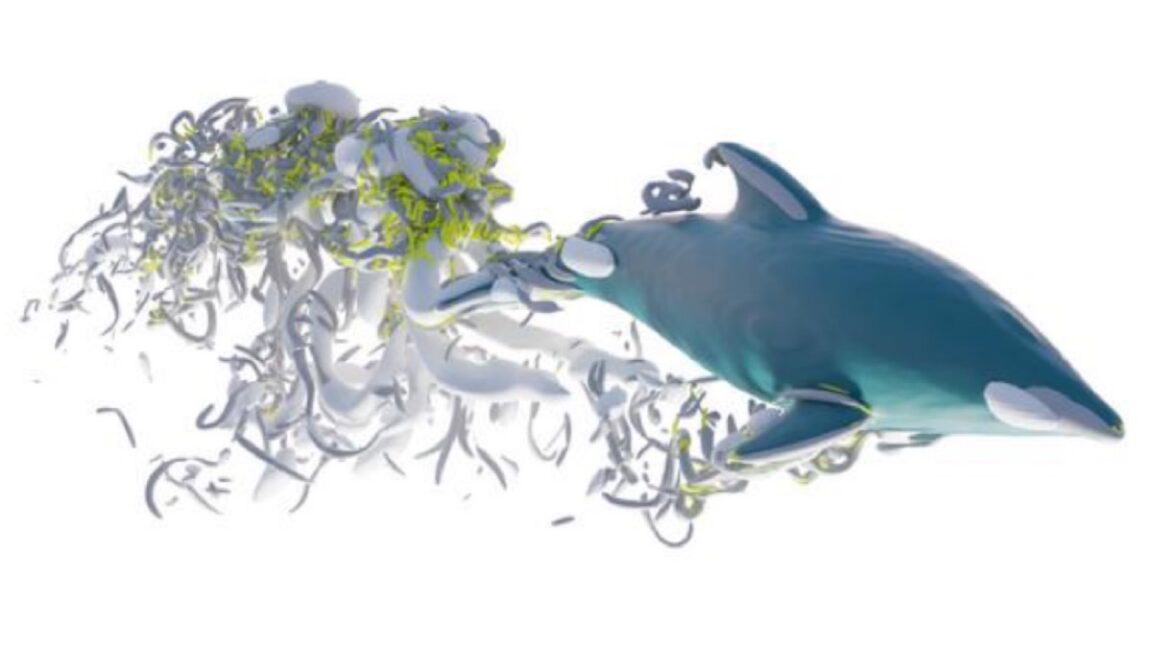
A team from Osaka University found that a dolphin's initial tail flap creates large vortex rings that produce thrust. These larger rings then break down into numerous smaller vortices that do not contribute to forward motion, solving a long-standing puzzle in marine biology.
Expert Quote
"Our simulations show for the first time that the dolphin's kick is not just a simple paddle but a sophisticated vortex generator," said Professor Takashi Suzuki, lead author of the study. "The large rings are responsible for propulsion, while the smaller ones are essentially wasted energy. This insight could help design more efficient underwater vehicles."
Background
Dolphins have long fascinated scientists and engineers for their effortless speed—up to 25 miles per hour in some species—and extraordinary agility. The exact hydrodynamics behind these abilities have remained elusive because observing live dolphins in detail is difficult. Previous research suggested vortices played a role, but the size hierarchy and their contribution to propulsion were unknown.
The Osaka team used high-resolution computational fluid dynamics (CFD) on Japan's Fugaku supercomputer to model a dolphin's tail motion with unprecedented detail. They solved the Navier-Stokes equations for a flapping tail, tracking the formation and evolution of vortex rings from the initial kick to the resulting wake. The simulations revealed two distinct populations: large rings that drive the dolphin forward and a cascade of smaller ones that merely dissipate energy.
This discovery refines earlier hypotheses that proposed special skin properties, mucous coatings, or unique swimming styles as the source of dolphin speed. The new work homes in on the tail's three-dimensional vortex dynamics as the primary propulsion mechanism.
The study is part of a broader April roundup of exciting but underreported scientific stories—including Roman ship repair techniques, fungi that can detect human urine, and the physics of crushing soda cans. Among these, the dolphin finding stands out for its potential to revolutionize underwater locomotion.
What This Means
This finding has immediate implications for biomimetic engineering. By understanding that only large vortex rings provide thrust, designers of underwater drones or autonomous submarines can optimize propulsion systems to produce those large rings while minimizing smaller, non-productive vortices. This could lead to quieter, more fuel-efficient, and faster underwater vehicles.
It also deepens our understanding of dolphin biology and evolution. The efficiency of their tail kicks may be a key adaptation that allowed dolphins to become such successful aquatic predators. Further research could explore how variation in tail shape and stiffness across species affects vortex production and swimming performance—potentially informing conservation efforts for endangered dolphin populations.
In the near term, engineers from robotics labs are already reaching out to the Osaka team, eager to apply these vortex principles to synthetic flippers and propellers. The work represents a significant step forward in biomimetic design, where nature's solutions inspire technology.