Launch and Mission Overview
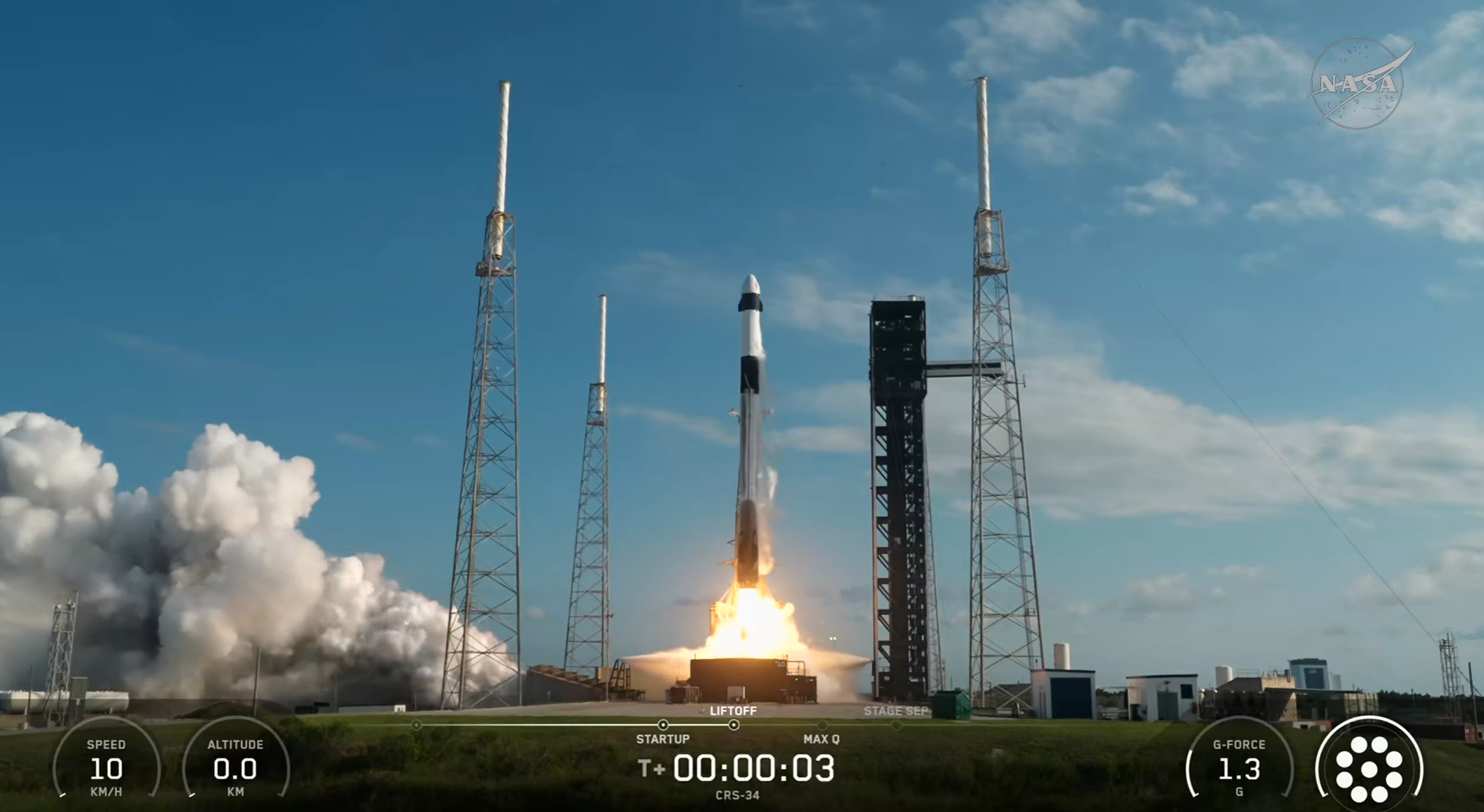
On Friday, May 15, 2026, at 6:05 p.m. EDT, a SpaceX Falcon 9 rocket lifted off from Space Launch Complex 40 at Cape Canaveral Space Force Station in Florida, carrying the Dragon cargo spacecraft laden with nearly 6,500 pounds of supplies and scientific payloads for the International Space Station (ISS). This mission, designated CRS-34, is the 34th commercial resupply flight under NASA's contract with SpaceX.
Docking and Coverage
Dragon is scheduled to autonomously dock with the ISS on Sunday, May 17, at approximately 7 a.m. EDT, connecting to the forward port of the Harmony module. The Expedition 74 crew will then begin unloading the cargo. Live coverage of the rendezvous and docking will start at 5:30 a.m. EDT on NASA+, Amazon Prime, and the agency's YouTube channel. For details on how to access NASA content across various platforms, including social media, viewers can refer to NASA's online resources.
Scientific Payloads: From Bone Health to Space Weather
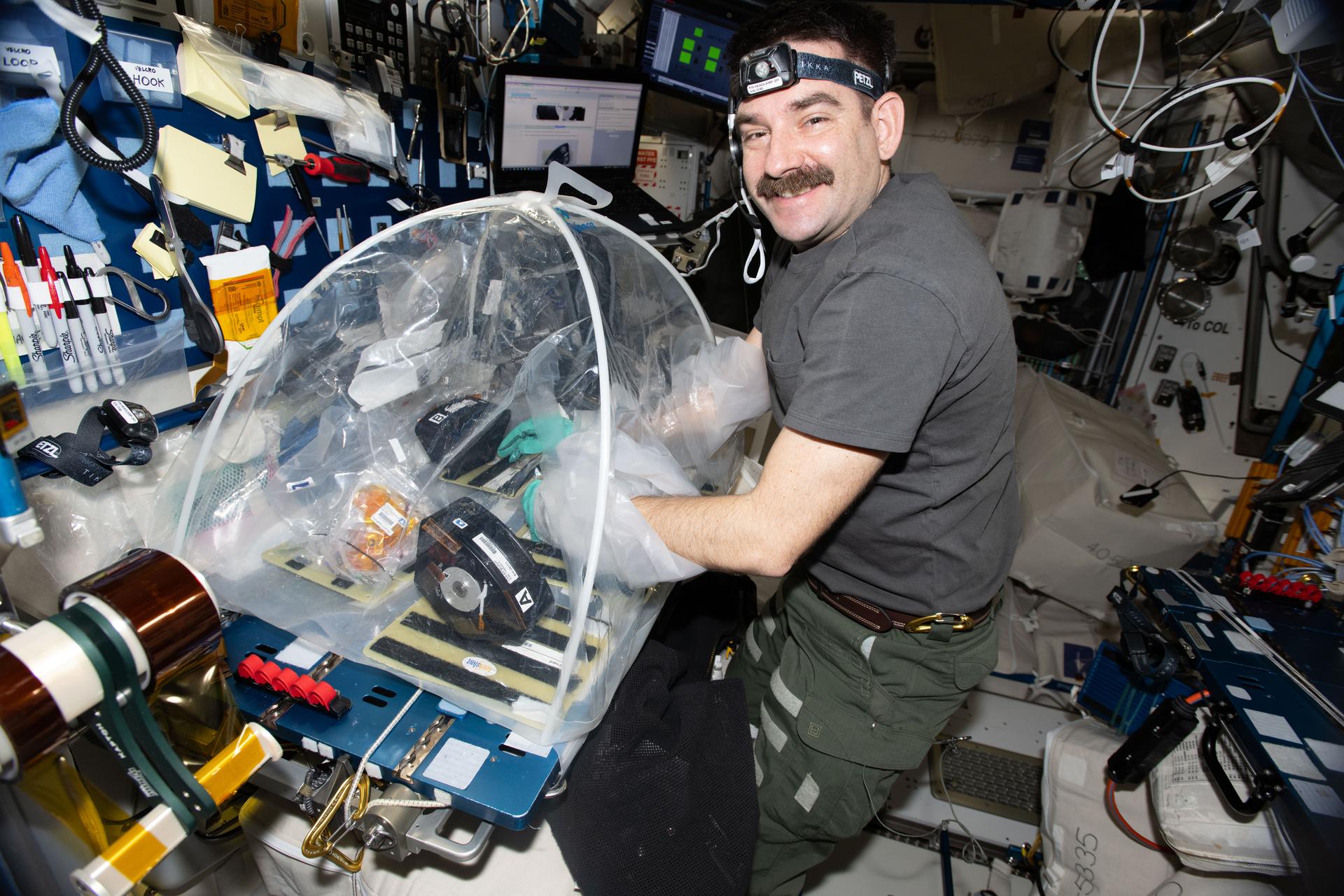
Dragon's manifest includes a diverse suite of experiments aimed at advancing knowledge in biology, materials science, and Earth observation. Here are some highlights:
Microgravity Simulation and Bone Scaffolds
One project will evaluate how accurately Earth-based simulators replicate the conditions of microgravity, helping researchers refine ground tests for space experiments. Another investigation, using a bone scaffold crafted from wood, could pave the way for novel treatments for osteoporosis and other bone-weakening conditions.
Red Blood Cells and Spleen Changes
Equipment designed to track alterations in red blood cells and the spleen during spaceflight will provide insights into how the human body adapts—or struggles—in orbit, which is critical for long-duration missions.
Charged Particle Instrument
A new instrument will study charged particles around Earth that can interfere with power grids and satellites. Understanding these space-weather phenomena helps protect both orbital assets and terrestrial infrastructure.
Planet Formation Investigation
Another experiment may offer fundamental clues about how planets emerge from dust and gas, by observing processes that mimic early planetary system evolution.
Sunlight Reflection Measurements
An instrument capable of highly accurate measurements of sunlight reflected by Earth and the Moon will enhance climate models and our grasp of Earth's energy balance.
Broader ISS Research Context
These experiments represent just a fraction of the hundreds of investigations conducted aboard the orbiting laboratory over the past 25 years. The station enables breakthroughs in biology, biotechnology, physical sciences, and Earth and space science that are impossible on Earth. It serves as a testbed for technologies needed for NASA's Artemis program and future human missions to Mars, while also expanding commercial opportunities in low Earth orbit.
Return and Splashdown
Dragon is expected to remain attached to the station until mid-June, when it will depart carrying time-sensitive research samples and cargo. The spacecraft will then descend and splash down off the coast of California, where recovery teams will retrieve the payloads for analysis.
For ongoing updates about International Space Station research, operations, and crew activities, visit the NASA ISS website.
Media Contacts
For further information:
- Jimi Russell, NASA Headquarters, Washington: 202-358-1100, james.j.russell@nasa.gov
- Danielle Sempsrott / Leejay Lockhart, Kennedy Space Center: 321-867-2468, danielle.c.sempsrott@nasa.gov / leejay.lockhart@nasa.gov
- Sandra Jones / Joseph Zakrzewski, Johnson Space Center, Houston: 281-483-5111, sandra.p.jones@nasa.gov